
Solid Polycarbonate for Marine Windows and Windshields: Strength, Clarity and Design Freedom
Share
25.09
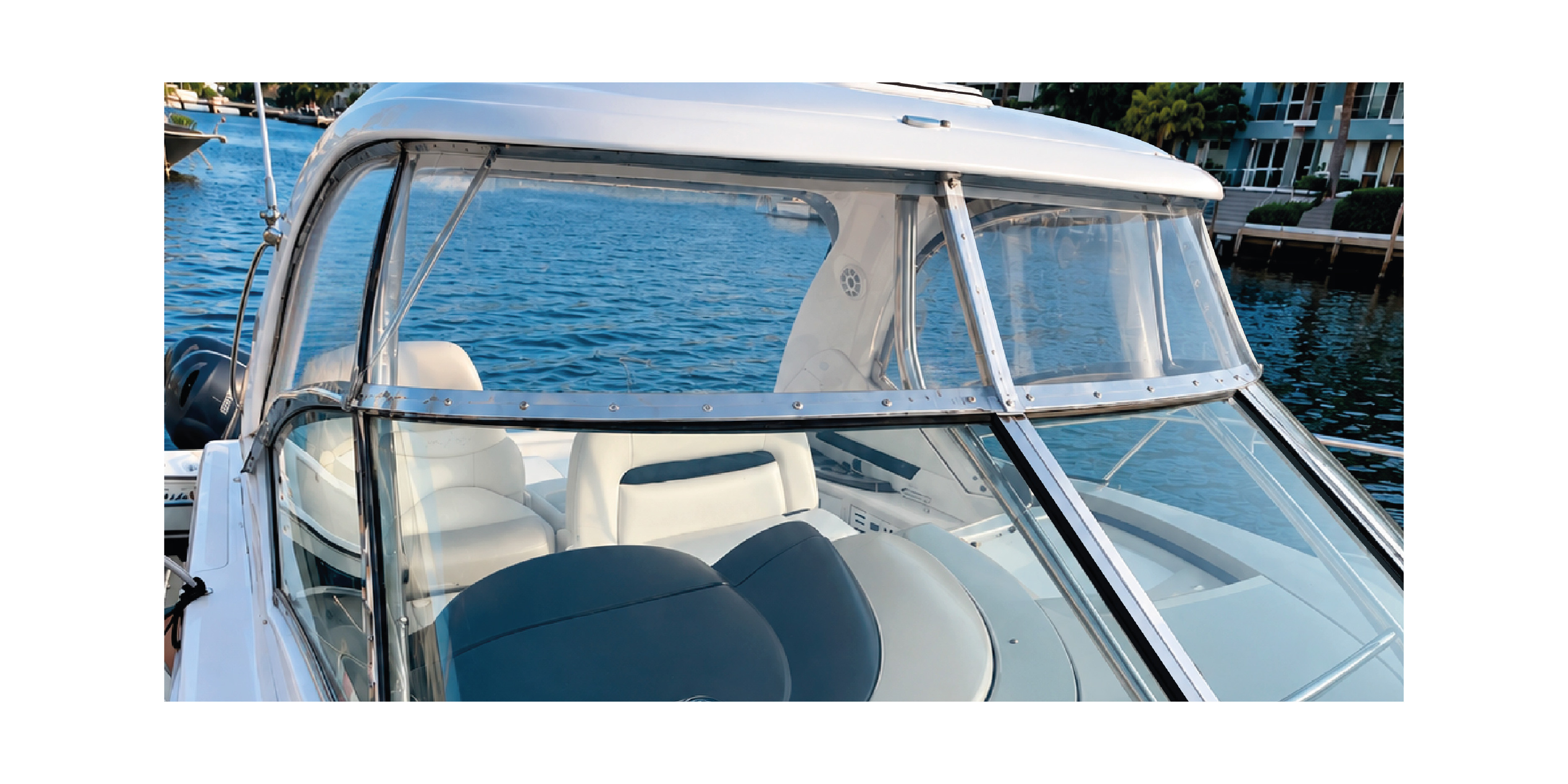
Marine windows and windshields are continuously exposed to challenging conditions. Wind, waves, accidental impacts, intense sunlight, salt, moisture and temperature changes can affect glazing performance over time. For boat builders, designers and owners, selecting the appropriate material is essential to maintaining visibility, safety and long-term performance.
Solid polycarbonate combines high impact strength, optical clarity, reduced weight and fabrication versatility, making it a practical alternative to conventional glass for a wide range of marine glazing applications.
Why Choose Solid Polycarbonate for Marine Applications?
Unlike conventional glass, solid polycarbonate combines transparency with exceptional impact resistance. This makes it particularly valuable in applications where visibility, durability and design flexibility are equally important.
Typical applications include:
- Boat windows and windshields
- Cabin windows
- Hatches and access panels
- Protective visors
- Control-console screens
- Interior partitions
- Protective glazing and guards
Its versatility allows it to be incorporated into recreational boats, fishing vessels, yachts and other specialized marine projects.
1. Exceptional Impact Strength
Marine windows and windshields may be exposed to waves, floating debris, docking operations, tools and equipment used on board. Under these conditions, the strength of the glazing material becomes an important safety consideration.
Solid polycarbonate can provide up to 250 times the impact strength of glass. Unlike conventional glass, which can shatter into sharp fragments, polycarbonate is highly resistant to breakage and can absorb significant impact energy.
This performance can help reduce the risk of sudden glazing failure in demanding applications.
2. High Optical Clarity
Clear visibility is essential when navigating, docking or operating a vessel in changing weather conditions. Depending on its thickness, color, coating and product configuration, transparent solid polycarbonate can provide light transmission of approximately 90%.
Its glass-like transparency makes it suitable for windshields, front visors, side windows and cabin enclosures where a clear field of vision is required.
For marine glazing, optical quality, surface protection and the intended viewing angle should be considered when selecting the appropriate sheet. The correct product grade can help minimize visual interference and support better long-term performance.
3. Approximately Half the Weight of Glass
Weight can influence transportation, handling, installation and the load placed on frames and supporting structures. Solid polycarbonate weighs approximately half as much as glass of comparable thickness, making panels easier to handle, fabricate and install.
This weight advantage can be particularly valuable when replacing large windows or developing curved windshield assemblies.
4. Two-Sided UV Protection Available
Continuous sunlight can gradually affect plastics that are not properly protected. For exterior applications, KlarSolid® UV360 provides UV protection on both surfaces of the sheet.
Two-sided UV protection offers greater installation flexibility because either face may be exposed to sunlight. This makes it especially useful for exterior windows, windshields, visors, hatches and other glazing components exposed to changing orientations or continuous outdoor conditions.
The appropriate UV-protected configuration should be selected according to the application and expected exposure.
5. Fabrication and Design Flexibility
Marine windows are not always simple rectangles. Contemporary vessel designs may require angled panels, rounded edges, custom openings or curved glazing assemblies.
Solid polycarbonate can be cut, drilled, routed and formed using suitable tools and fabrication procedures. Its versatility gives designers and fabricators greater freedom to develop customized glazing solutions while maintaining a clean, contemporary appearance.
Cold bending and forming capabilities depend on the sheet thickness, minimum bend radius and selected product grade. Abrasion-resistant or surface-protected variants may require specific fabrication procedures.
Clear, tinted and specialized finishes may also be selected to complement the vessel’s design or help manage glare and privacy requirements.
Surface Protection for Frequently Cleaned Glazing
Marine glazing often requires regular cleaning because of salt, water spots and environmental residue. For applications where the surface will be cleaned or handled frequently, an abrasion-resistant option can provide enhanced surface protection compared with standard polycarbonate.
The selected grade should match the application’s requirements for optical clarity, outdoor exposure, fabrication and maintenance.
Cleaning and Maintenance
Proper cleaning helps preserve transparency and surface appearance.
Begin by rinsing the panel thoroughly with fresh water to remove salt, sand and loose particles. Wash it gently with mild, pH-neutral soap and a clean microfiber cloth or non-abrasive sponge. Rinse thoroughly and dry with a clean, soft cloth.
Do not use abrasive pads, scrapers, strong solvents or harsh chemical cleaners. Cleaning products and procedures should always be checked for compatibility with the selected polycarbonate grade and surface treatment.
A Versatile Alternative for Marine Glazing
Solid polycarbonate offers a strong combination of impact resistance, optical clarity, reduced weight and fabrication flexibility. With general-purpose, two-sided UV-protected and abrasion-resistant options available, the material can be selected according to different marine glazing requirements.
The correct grade, thickness, bend radius, frame design, fastening method and installation procedure are essential to achieving the expected performance.
Looking for a solid polycarbonate solution for your next marine project?
Contact KLAR and visit us at IBEX 2026 in Tampa, Florida — Booth 1-1010.